First: find your face shape from your ratio
Your analyzer result gives you the two numbers that matter most: face length, face width, and their ratio. Here's how to translate them into a shape (using the analyzer's measurement, which runs from the top of the face outline to the chin). A ratio around 1.15 or below means length and width are similar—if your jawline is soft and curved you're likely round; if it's angular with a broad jaw, you're likely square. A ratio above about 1.15 means a visibly longer face—usually oval (softly tapered), or oblong above roughly 1.25 with straight sides. For reference: BTS's JIMIN measures 1.15, Cha Eun-woo 1.23, Kim Soo-hyun 1.28 with this tool.
Then check where your face is widest. Widest at the forehead with a tapering chin → heart. Widest at the cheekbones with a narrower forehead and chin → diamond. Roughly even → oval. Most styling advice is really about one idea: adding visual length or width where your shape needs balance—an optical nudge to your ratio, no surgery required.
Oval Face
Balanced proportions with flexible styling options.
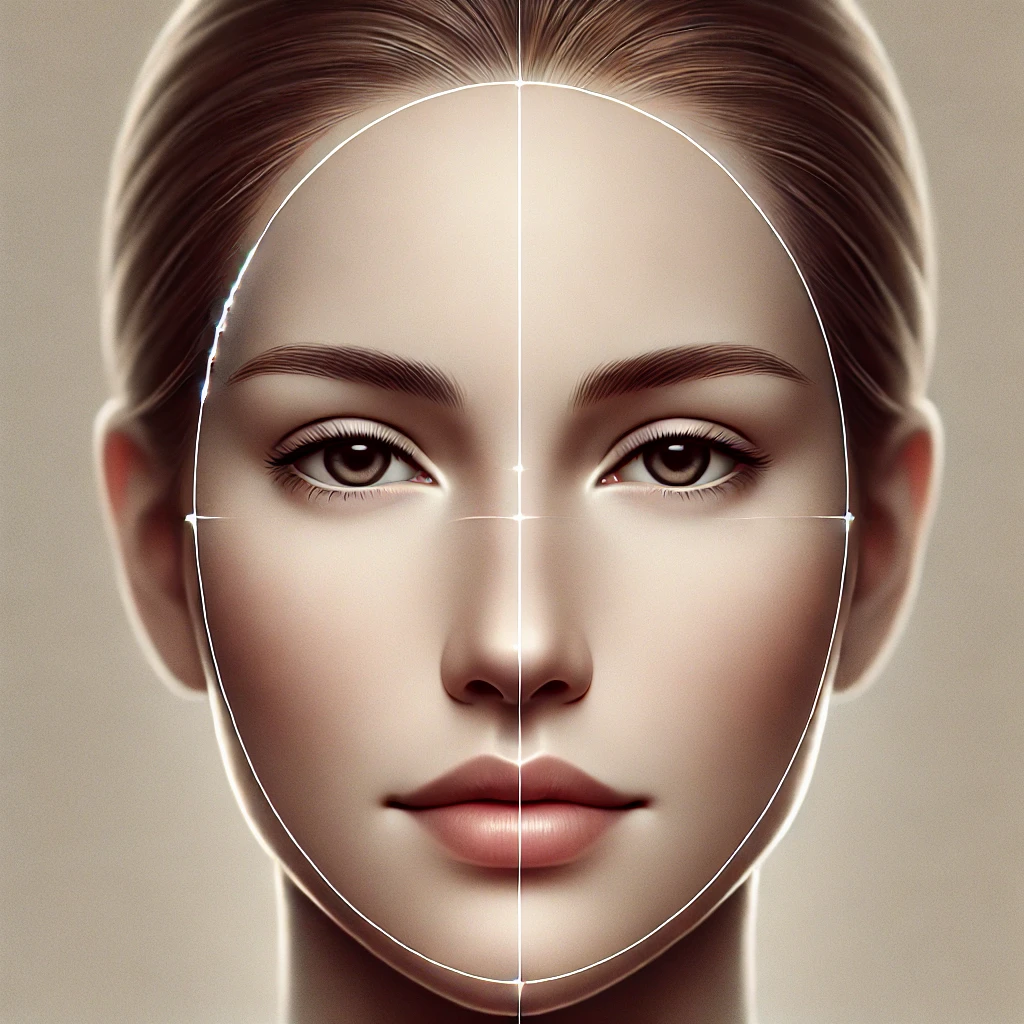
The oval face—slightly longer than wide, with gently curved lines and a softly tapered chin—is the shape most other styling advice tries to imitate, which means nearly everything works. Soft waves, long layers, blunt bobs, pixie cuts, slicked-back styles: the underlying proportions stay balanced through all of them. Treat this flexibility as a chance to choose by hair texture and lifestyle rather than by correction.
The one caution: very heavy, straight-across fringes that cover the forehead can visually shorten the face and tip it toward reading as round. If you love a fringe, wispy, curtain, or side-swept versions keep the vertical line intact. For glasses, almost any frame works—walnut-shaped and gently rectangular frames are classic picks.
- Choose styles by hair texture and maintenance, not correction.
- Prefer light or curtain fringes over heavy straight ones.
- Glasses: most frames work; match frame width to face width.
Round Face
Create the impression of length and definition.
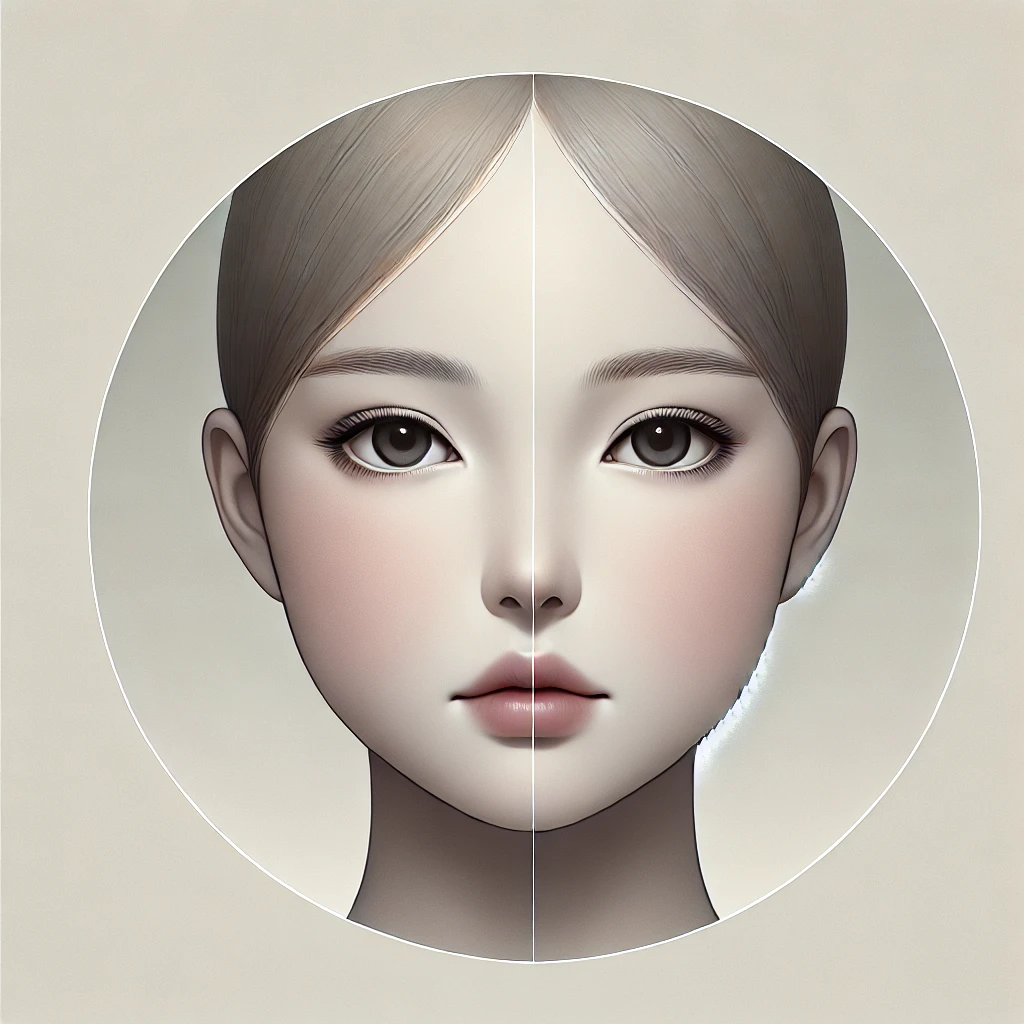
Round faces (ratio around 1.15 or below, soft jawline, full cheeks) read youthful and friendly—the styling goal is simply to add vertical line and definition. Height at the crown, long layers that start below the chin, and a deep side part all draw the eye up and down rather than across. Straight or softly waved hair falling past the jaw lengthens the outline; curls are great too when the volume sits at the top rather than at the cheeks.
What to avoid: blunt bobs that end exactly at the widest point of the face, straight-across heavy fringes, and maximum volume at ear level—each adds width where there's already plenty. For glasses, angular rectangular frames add the definition round features lack. Men with round faces often benefit from a beard trimmed longer at the chin and shorter on the cheeks, which builds a subtle V-line.
- Go for height at the top (volume, layers) and length past the jaw.
- Use diagonal lines: deep side part, side-swept fringe.
- Avoid chin-length blunt cuts and cheek-level volume.
- Glasses: rectangular or angular frames add definition.
Square Face
Soften angular features and strong jawlines.
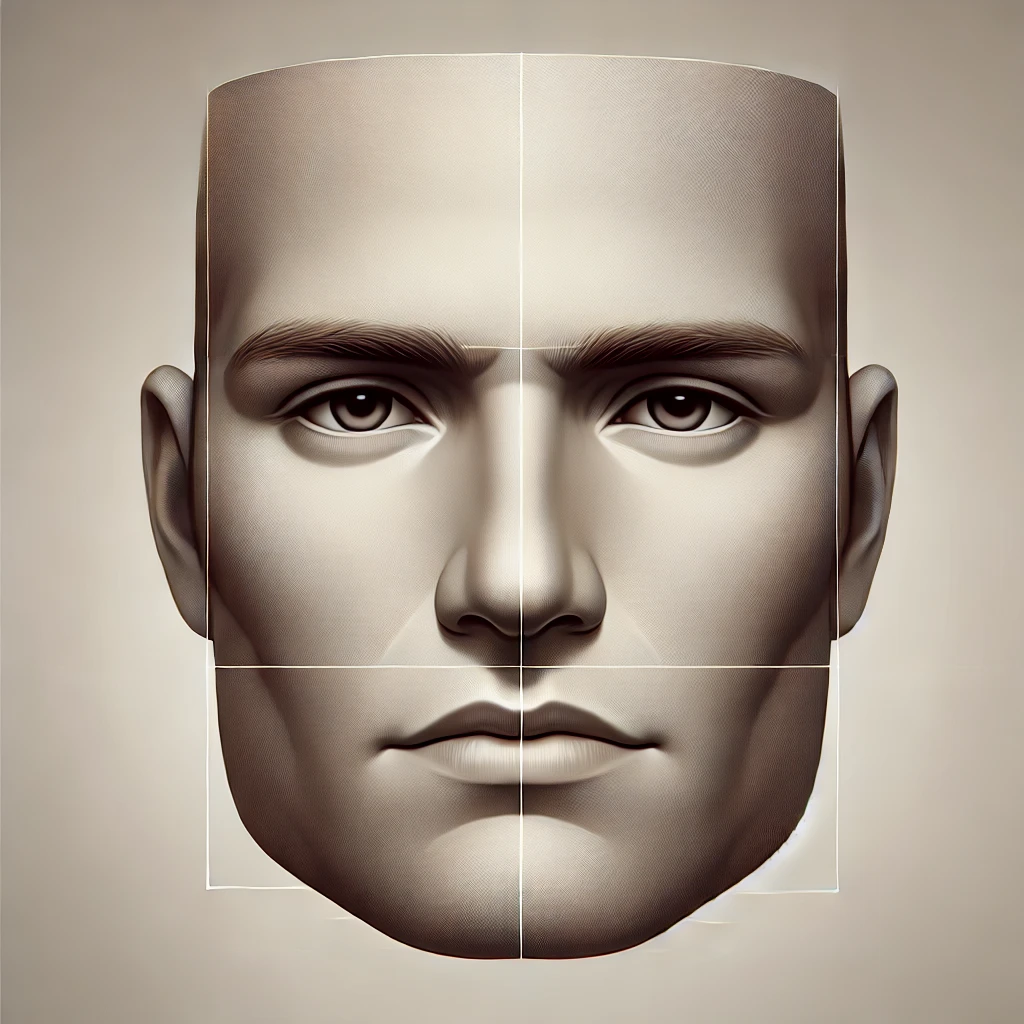
Square faces share the round face's balanced ratio but with an angular, defined jaw and a broader forehead—a bone structure photographers love because it holds light beautifully. If you want to soften it, work curves against the angles: side-swept or curtain fringes, textured waves, and long layers that begin below the cheekbones all break up straight lines. Ends styled toward the face (rather than flipped out) gently narrow the jaw area.
The classic mistakes are blunt cuts that stop exactly at the jawline (they draw a second horizontal line right where the face is squarest) and perfectly straight, heavy fringes that box in the forehead. That said, don't feel obligated to soften anything—a slicked-back style or sharp bob that leans into the angles is a deliberate, fashion-forward look. For glasses, round and oval frames counterbalance angular features.
- Prefer texture and waves over perfectly straight lines.
- Keep movement around the jaw (waves/curls, face-framing layers).
- Avoid blunt cuts that end exactly at the jaw.
- Glasses: round or oval frames soften angles.
Heart-Shaped Face
Balance a wider forehead with more volume near the chin.
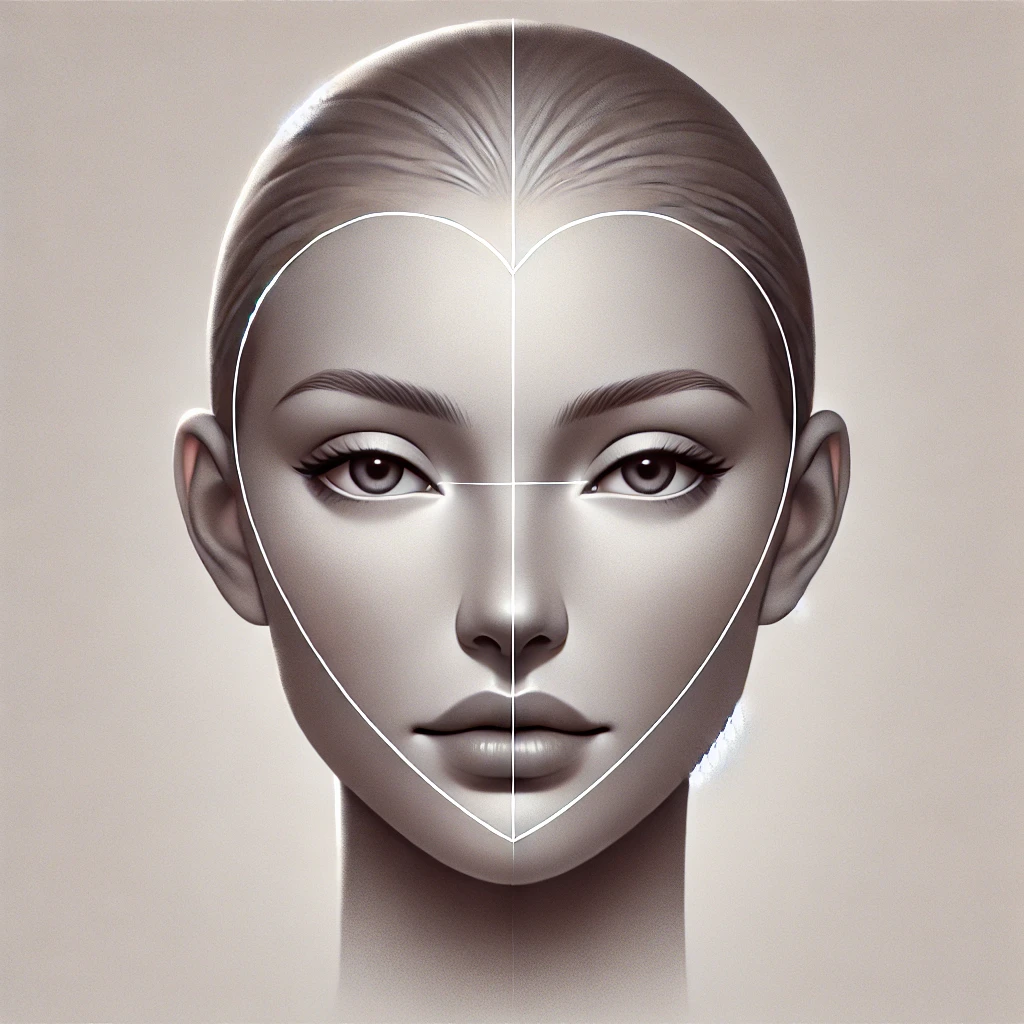
Heart-shaped faces are widest at the forehead and cheekbones, tapering to a delicate, sometimes pointed chin. The styling logic is redistribution: reduce emphasis up top, add fullness down low. Chin-length bobs, lobs with soft bends, and ends that flip outward all build width exactly where the face narrows. Side-swept and curtain fringes are especially flattering because they cut the visible width of the forehead while keeping the eyes as the focal point.
Keep crown volume moderate—height at the top of an already top-heavy shape exaggerates the imbalance—and avoid very short cropped styles that leave the chin isolated. Layers should start at chin level or below, never at the cheekbones. For glasses, bottom-heavy or rimless frames keep visual weight low; for makeup, a touch of blush low on the cheeks (rather than high on the cheekbones) has the same balancing effect.
- Add fullness near the jaw/chin (ends that flip out slightly).
- Side-swept or curtain fringe reduces forehead emphasis.
- Keep crown volume moderate; start layers at chin level.
- Glasses: bottom-heavy or rimless frames balance the shape.
Diamond Face
Add visual width at the forehead and jaw to balance high cheekbones.
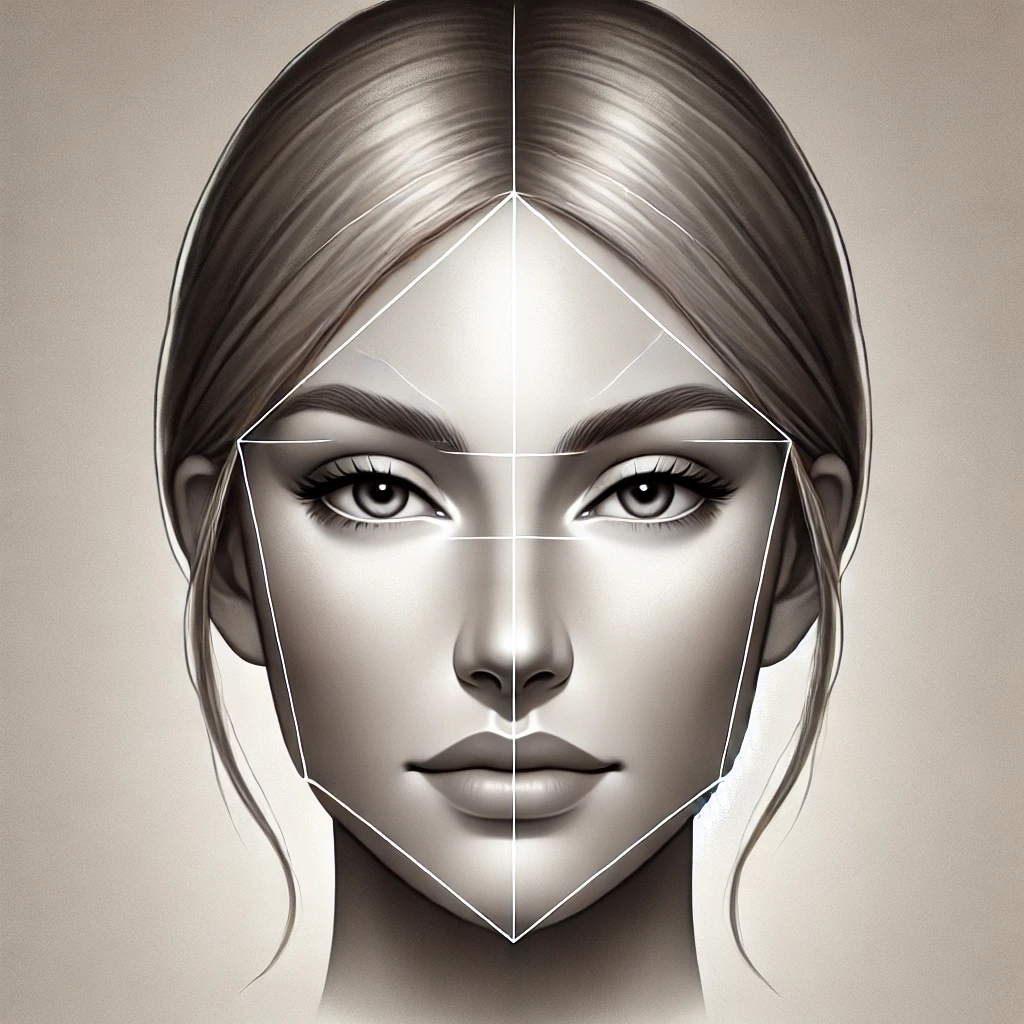
Diamond faces are widest at the cheekbones, with both a narrower forehead and a narrower chin—dramatic bone structure that many people pay contouring tutorials to fake. The styling goal is to add width at the two narrow zones. Fringes (nearly any kind) widen the forehead; chin-length styles, outward-flipped ends, and soft curls at jaw level fill out the lower third. Tucking hair behind the ears is a diamond-face superpower: it shows off the cheekbones on purpose.
Avoid adding even more volume at cheekbone level—mid-length styles with maximum width at the center of the face exaggerate the diamond—and be careful with severe slicked-back looks, which expose both narrow zones at once. For glasses, frames with detailing or width at the browline (like cat-eye or browline styles) build up the forehead nicely.
- Try fringes or volume near the temples to widen the forehead.
- Add fullness at jaw level: flipped ends, soft curls, chin bobs.
- Avoid extra volume at cheekbone height.
- Glasses: browline or cat-eye frames balance the upper face.
Next recommended pages
Continue improving results with related guides: